

Latest Version
October 29, 2024
AZUR INTERACTIVE GAMES LIMITED
Adventure
iOS
0
Report a Problem
More About :game
Specific Game Information
Game Title: Backpack Brawl: Hero Battles
Game Genre: Strategy, Auto-Battler, RPG, PvP
Developer: Azur Interactive Games Limited
Platform: iOS (iPhone and iPad)
Game Category: Strategy
Game Price: Free to Download
Monetization: In-App Purchases
Game Setting: Medieval Fantasy
Main Gameplay: Backpack Organization, Item Crafting, Inventory Management, and Automatic Combat
Multiplayer: Competitive 1v1 PvP Battles
Core Objective: Build a powerful inventory, discover item combinations, defeat opponents, and advance through competitive rankings.
Introduction to Backpack Brawl: Hero Battles
Backpack Brawl: Hero Battles brings a creative twist to the strategy and auto-battler genre by making inventory organization the foundation of its combat system. Instead of relying entirely on quick reactions or direct character controls, players must think carefully about which equipment to purchase, how to combine different objects, and where to position everything inside their backpacks.
The game takes place in a colorful medieval fantasy world filled with distinctive heroes, dangerous weapons, magical equipment, and challenging opponents. Each match presents an opportunity to improve your character's setup and discover combinations that can make a significant difference during combat.
One of the most interesting aspects of the experience is that two players can use similar equipment but achieve completely different results because of how they organize their inventories. Item placement, available space, equipment combinations, and hero abilities all contribute to the effectiveness of a build.
Backpack Brawl is particularly appealing to players who enjoy tactical decision-making, resource management, experimentation, and competitive battles. Whether you prefer creating powerful melee combinations, developing magical builds, or using ranged attacks, there are different approaches to explore.
Main Gameplay Features
Strategic Backpack Management
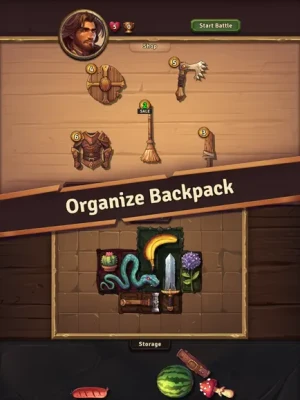
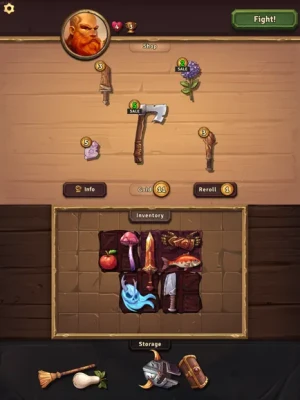
Inventory management is the central mechanic of Backpack Brawl. Players receive a limited amount of backpack space and must decide how to use every available slot effectively.
Weapons, armor, magical artifacts, and other equipment occupy different amounts of space. Some objects also provide bonuses to neighboring items, making their positions extremely important.
A successful backpack is not simply one containing the largest number of powerful objects. It is an organized collection of equipment that works together to improve the hero's overall performance.
Players should consider item dimensions, adjacency bonuses, equipment effects, and future expansion opportunities before making major inventory decisions.
Multiple Heroes with Unique Abilities
Choosing the right hero is an important part of developing a successful strategy. Backpack Brawl features a diverse roster of characters with different abilities, strengths, and preferred playstyles.
Some heroes are better suited to aggressive combat, while others benefit from magical equipment, defensive combinations, or ranged attacks.
Every hero encourages players to approach inventory management differently. Learning the strengths of each character helps you understand which items deserve priority and which combinations are worth pursuing.
Trying different heroes also prevents the gameplay from becoming repetitive because each character introduces new strategic possibilities.
Item Crafting and Merging
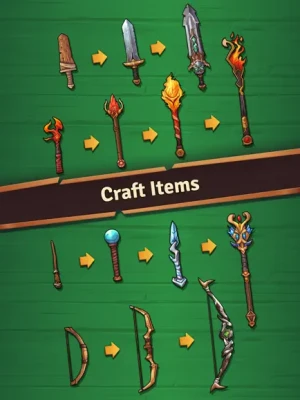
Crafting and merging are important systems that allow players to improve their equipment and discover stronger combinations.
Instead of collecting random objects without a clear plan, players can work toward particular equipment upgrades. Combining suitable items can unlock more powerful equipment and provide additional benefits during combat.
Learning which objects can be combined is especially useful when developing a long-term build.
It is also important to avoid merging everything immediately. Sometimes, keeping individual items is more valuable than upgrading them, particularly when they provide useful bonuses or support other equipment in the backpack.
Dynamic Item Placement
Positioning is one of the most important elements of the game. Certain items provide bonuses to adjacent equipment, which means a small change in backpack organization can improve the effectiveness of an entire setup.
Players should experiment with different arrangements to discover useful synergies.
Weapons can benefit from supporting objects, defensive equipment can improve survivability, and magical artifacts can contribute to combinations that increase offensive potential.
Understanding these relationships is essential for creating competitive builds.
Competitive PvP Battles
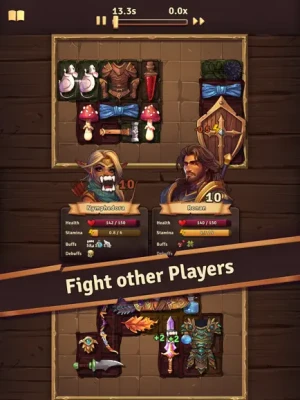
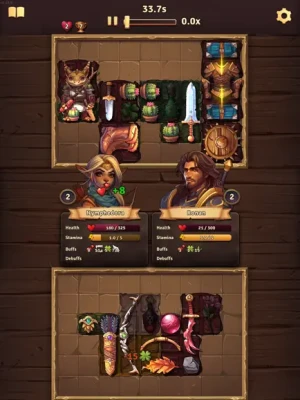
Backpack Brawl features exciting one-on-one battles against other players. These matches test the effectiveness of the inventory you have prepared rather than your ability to control every individual attack.
Once combat begins, your hero automatically uses the available equipment and abilities.
The result depends heavily on preparation, equipment combinations, hero selection, and the overall balance of your backpack.
Studying previous battles can help you identify weaknesses and make better decisions in future matches.
Progression and Unlockable Rewards
The game includes progression systems that give players reasons to continue experimenting and improving their strategies.
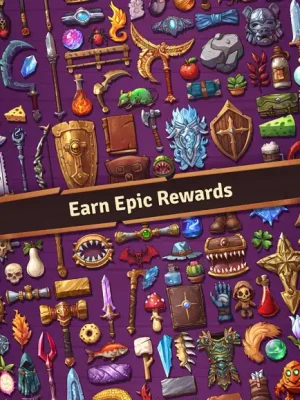
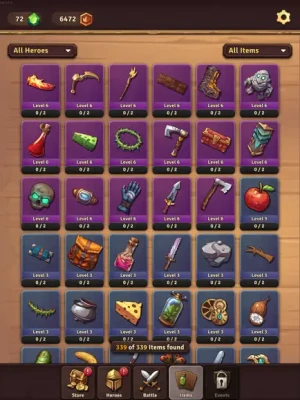
As you advance, you can unlock additional equipment, expand your tactical possibilities, and work toward better competitive rankings.
Seasonal content and special events introduce additional challenges and rewards, while achievements provide further goals for dedicated players.
The experience becomes more interesting as your understanding of the available heroes and equipment improves.
Guilds and Social Features
Backpack Brawl also includes guild features that add a social element to the experience.
Players can join guilds, communicate with other members, share battle replays, and participate in guild-related activities.
Guild Treasure Hunts provide additional opportunities to earn rewards through cooperative progression.
These features make it easier to exchange ideas, discuss equipment combinations, and learn from other players.
Understanding the Main Game Mechanics
How Backpack Organization Works
The backpack is your primary preparation area. Every available slot has potential value, and your decisions determine how effectively your hero can use the equipment you collect.
A good inventory should have a clear purpose. Rather than purchasing every interesting object, concentrate on equipment that supports your chosen strategy.
For example, an offensive build should prioritize damage-related equipment and useful supporting effects. A defensive build should focus more on survivability and protection.
The most effective arrangements also take advantage of adjacency bonuses.
Understanding Item Synergies
Item synergies occur when equipment works together to produce stronger results.
Some objects improve neighboring equipment, while others contribute additional effects when positioned correctly.
The important thing is to understand that item value is not always determined by its individual strength.
A moderately powerful item can become extremely valuable when it supports several other objects.
Experimenting with different combinations is one of the best ways to understand the game's deeper mechanics.
Automatic Combat System
Combat in Backpack Brawl is largely automatic. Players prepare their equipment before entering a match, and their heroes use the available weapons and abilities during the fight.
This design places greater emphasis on planning and preparation.
If your hero loses repeatedly, the best solution is often to examine your equipment rather than simply purchasing more powerful weapons.
Look for missing defensive options, weak item combinations, poor positioning, and equipment that does not support your chosen hero.
Full Strategy Guide for Backpack Brawl: Hero Battles
Start by Learning Your Hero
One of the biggest mistakes beginners make is trying to use the same equipment strategy with every character.
Each hero has individual abilities and gameplay characteristics. A setup that works well for one character might perform poorly with another.
Spend time learning your selected hero before investing heavily in a particular equipment combination.
Pay attention to the character's strengths, special effects, and the types of items that complement its abilities.
Once you understand these details, purchasing decisions become easier and your backpack will have a clearer direction.
Build Around a Specific Strategy
Having a defined strategy is much better than collecting equipment without considering how it works together.
Before purchasing an item, ask yourself whether it supports your current build.
If you are developing an aggressive setup, prioritize equipment that increases damage and helps you defeat opponents efficiently.
If you prefer a defensive approach, look for protective items and combinations that improve your ability to survive longer battles.
A balanced build can also be effective, particularly when you are still learning the game.
However, avoid spreading your resources across too many unrelated equipment types. A focused strategy usually produces more consistent results.
Make Every Backpack Slot Count
Space management is one of the most important skills to develop.
A backpack filled with random equipment may look impressive, but poor organization can prevent you from taking advantage of valuable item combinations.
Start by identifying your most important equipment. Place the central items first, then arrange supporting objects around them whenever their effects benefit from adjacency.
Consider the size and shape of every object before making changes.
It is also useful to preserve some flexibility when possible. Keeping room for future purchases can prevent you from being forced to remove useful equipment when a valuable opportunity appears.
Prioritize Useful Item Combinations
Do not judge equipment only by its individual statistics or appearance.
Some items are particularly valuable because they improve nearby objects or contribute to a larger combination.
Learn which equipment works well together and make those relationships the foundation of your backpack.
When you discover a promising synergy, consider how additional items could strengthen it.
However, do not sacrifice the entire inventory just to complete one combination. Your hero still needs enough overall damage, protection, and useful effects to handle different opponents.
Understand When to Craft and Merge
Crafting and merging can provide access to stronger equipment, but timing is important.
Before combining items, consider their current usefulness.
If an individual object provides a valuable effect, merging it too early could weaken your existing arrangement.
On the other hand, holding unnecessary equipment for too long can waste precious backpack space.
The best approach is to evaluate each upgrade according to your current strategy.
Prioritize combinations that improve your build immediately or move you closer to a clearly defined objective.
Balance Damage and Defense
A common beginner mistake is concentrating entirely on offensive power.
High damage is useful, but it does not automatically guarantee victory. Your hero also needs enough protection and survivability to withstand enemy attacks.
An effective build should balance offensive equipment with defensive support.
Consider how quickly your hero can defeat an opponent and whether it can survive long enough to make full use of its weapons.
If you consistently lose despite dealing considerable damage, improving your defensive setup may be more beneficial than purchasing another offensive item.
Likewise, if your hero survives for a long time but struggles to finish opponents, you may need to increase your damage output.
Learn from Every Defeat
Losing a match should be treated as an opportunity to improve your strategy.
Instead of immediately changing your entire backpack, identify the specific weakness that caused the loss.
Examine whether your damage was insufficient, your defenses were too weak, or your item arrangement failed to create useful synergies.
Pay attention to how the opponent's equipment performed.
You may discover that a particular item combination is more effective than expected or that your current strategy has a weakness you had not previously considered.
Make one or two meaningful adjustments and test the results in another match.
This approach makes it easier to understand which changes actually improve your performance.
Study Opponent Builds
Competitive battles become much easier when you understand how other players organize their equipment.
Observe the types of items they prioritize and look for combinations that repeatedly appear in successful builds.
Consider whether their strategy relies on overwhelming damage, defensive endurance, magical effects, or a combination of different mechanics.
Use these observations to improve your own inventory.
The goal is not to copy every opponent. Instead, identify useful ideas and adapt them to your selected hero and available equipment.
Manage Your Resources Carefully
Purchasing decisions should support your overall plan.
Avoid spending resources on equipment simply because it appears powerful.
Consider whether the item fits your hero, improves your current arrangement, or provides an important missing effect.
Sometimes, saving resources for a more useful opportunity is better than purchasing an unnecessary upgrade.
Resource management becomes especially important when backpack space is limited.
Think about both the immediate benefits of a purchase and its potential value in later rounds.
Expand Your Inventory Strategically
Additional backpack space provides more opportunities to develop complex combinations.
However, extra space is most valuable when you know how to use it.
Avoid filling newly available slots with unnecessary equipment.
Instead, use the additional capacity to introduce supporting items, improve existing synergies, or maintain a better balance between offense and defense.
A larger inventory should make your strategy more effective, not simply more complicated.
Experiment with Different Heroes
Once you become comfortable with your first character, try other heroes.
Each new character offers a different way to approach combat and inventory organization.
Experimenting with different playstyles also helps you understand the wider equipment system.
You may discover that items you previously ignored become extremely useful when paired with another hero's abilities.
Keep track of successful combinations and learn how different characters handle similar opponents.
Use Battle Replays to Improve
Battle replays and combat information can provide useful insights into your performance.
When a match does not go as expected, review the available information to understand how your equipment performed.
Look for items that consistently contribute to your victories and objects that fail to provide meaningful benefits.
This can help you identify inefficient purchases and improve the overall structure of your backpack.
Sharing replays through the game's social features can also create opportunities to exchange strategies with other players.
Participate in Seasonal Events
Special events and seasonal activities provide additional challenges and opportunities to earn rewards.
Check the available events regularly and understand their requirements before participating.
Some activities may introduce different objectives or special gameplay conditions.
Participating in these events can also encourage you to experiment with equipment and strategies outside your usual competitive setup.
Advanced Strategies for Competitive Players
Create a Synergy-Based Inventory
Advanced players should focus on creating inventories where multiple items support one another.
Instead of building around only one powerful weapon, consider how the entire backpack functions as a system.
Look for opportunities to connect offensive equipment with supporting items and combine useful effects without wasting space.
The objective is to maximize the value of every item rather than relying on isolated pieces of powerful equipment.
Adapt Your Strategy During Preparation
A fixed strategy can be useful, but experienced players understand when to make adjustments.
The items available to you may not always support your original plan.
If the equipment options do not match your intended build, consider developing an alternative combination.
Being flexible can prevent wasted resources and help you make the most of unexpected opportunities.
Avoid Overcommitting to One Item
It is tempting to build an entire strategy around a particularly powerful object.
However, relying too heavily on one item can create weaknesses elsewhere in your backpack.
If the combination does not perform as expected, your entire setup may struggle.
Instead, create a build with several complementary sources of value.
This provides more flexibility and makes your hero less dependent on one specific equipment effect.
Improve Your Positioning Knowledge
Advanced inventory organization requires understanding how different item shapes and adjacency effects interact.
Try moving equipment into alternative positions and compare the results.
Small adjustments can improve the number of useful interactions within the backpack.
Do not assume that the first arrangement you create is the best one.
Testing different layouts is one of the most effective ways to discover stronger combinations.
Develop a Reliable Build Before Chasing Rankings
Competitive rankings are an important part of the experience, but rushing toward higher ranks without understanding your build can lead to inconsistent results.
Focus on creating a reliable strategy that performs well against different opponents.
Once you have a strong understanding of your hero and equipment, you can concentrate more on competitive progression.
Consistency is often more valuable than occasional victories achieved through risky combinations.
Common Beginner Mistakes to Avoid
Purchasing Too Many Unrelated Items
Collecting everything that looks powerful can create an inventory without a clear direction. Choose equipment that supports your main strategy.
Ignoring Item Placement
An excellent item can lose much of its potential when positioned incorrectly. Always consider adjacency effects and available space.
Focusing Only on Damage
A hero with impressive offensive power can still lose if its defensive capabilities are insufficient. Maintain a sensible balance.
Merging Equipment Too Quickly
Not every item should be upgraded immediately. Consider whether the individual pieces are currently providing useful effects.
Using the Same Build with Every Hero
Different characters have different abilities and strengths. Adjust your inventory to complement your selected hero.
Ignoring Previous Battle Results
Repeatedly using an unsuccessful setup without making adjustments slows down your progress. Learn from every match.
Wasting Backpack Space
An unnecessarily crowded inventory makes future decisions more difficult. Prioritize useful equipment and meaningful combinations.
Ignoring Events and Progression Opportunities
Special activities, achievements, and guild features can provide additional ways to develop your account and explore the game.
Tips for Becoming a Better Backpack Brawl Player
Learn your hero's abilities before developing a complicated build.
Organize important equipment before filling the remaining backpack space.
Prioritize items that create useful combinations.
Experiment with different arrangements to discover adjacency bonuses.
Maintain a reasonable balance between damage and defense.
Think carefully before crafting or merging equipment.
Avoid purchasing items that do not contribute to your strategy.
Study successful opponent builds and adapt useful ideas.
Review previous battles to identify weaknesses.
Try different heroes to expand your understanding of the game.
Participate in seasonal events and other available activities.
Use guild features to exchange ideas and share battle replays.
Focus on consistent performance instead of chasing quick victories.
Is Backpack Brawl: Hero Battles Worth Playing?
Backpack Brawl: Hero Battles is an enjoyable choice for players who appreciate strategy games that reward careful thinking and experimentation.
Its biggest strength is the way it transforms inventory management into a competitive activity. Organizing a backpack becomes much more than a simple preparation task because every decision can influence the outcome of a battle.
The combination of different heroes, equipment, crafting opportunities, item synergies, and competitive matches creates plenty of room for experimentation.
The automatic combat system also makes the game accessible to players who prefer planning and strategic preparation over direct action controls.
Although mastering the equipment system takes time, the learning process is an important part of the experience. Each new combination provides an opportunity to discover a better approach and improve your performance.
Players who enjoy tactical challenges, medieval fantasy settings, competitive PvP, and inventory-based gameplay will find plenty to explore.
Final Thoughts
Backpack Brawl: Hero Battles offers a distinctive strategy experience built around the idea that smart preparation can be just as important as powerful equipment. From selecting the right hero to organizing weapons, crafting upgrades, and discovering valuable item combinations, every decision contributes to your success.
The most effective players are not necessarily those who collect the strongest individual items. They are the ones who understand how different pieces of equipment work together and use their available backpack space intelligently.
Whether you are a beginner learning the basics or an experienced competitor refining advanced builds, the game offers plenty of opportunities to improve your tactical skills.
Build your inventory carefully, learn from every battle, experiment with different heroes, and develop a strategy that can take you to the top of the rankings.
Rate the Game
User Reviews










Popular Games



















 Android
 iOS
 Windows
 Xbox